Firefighter Memory Match
Test your memory by matching pairs of firefighter equipment cards. Learn about the tools that keep communities safe while you play!
How to Play
Choose Your Difficulty
Use the difficulty selector to choose between 6 pairs (Easy) and 12 pairs (Pro). Fewer pairs mean a shorter game with less to remember, while 12 pairs will seriously test your memory with 24 cards on the board.
Flip Two Cards
Click or tap any face-down card to reveal the firefighter equipment behind it. Then flip a second card. The cards use 3D flip animations so you can see each piece of equipment clearly. Each card shows a different tool used in real firefighting operations.
Find Matching Pairs
If both cards show the same equipment, they stay face-up and glow green — you've found a match! If they don't match, both cards flip back face-down after a brief pause. Try to remember where each card is located.
Use Preview & Zoom
On desktop, hover over any revealed card to see an enlarged preview. Click any face-up card to open a full-screen lightbox with a high-resolution image of the equipment. This lets you study the details of each firefighting tool.
Complete the Board
Match all pairs to win! The game tracks your moves and time. Challenge yourself to finish in fewer moves and less time. Hit “New Game” to shuffle and play again, or change the difficulty for a fresh challenge.
Tips & Strategies
▸ Start With Fewer Pairs
If 12 pairs feels overwhelming, start with 6 pairs on Easy mode. Once you can consistently match all pairs in under 20 moves, increase the difficulty. Building up gradually trains your spatial memory more effectively.
▸ Remember Positions, Not Just Images
Instead of trying to memorize every card, focus on remembering the position of cards you've already seen. When you flip a new card, think about whether you've seen its match before and where it was located.
▸ Work Systematically
Scan the board in a consistent pattern — row by row or column by column. This systematic approach ensures you see every card and builds a mental map of the board. Avoid random clicking, which wastes moves.
▸ Use the Hover Preview
On desktop, hover over matched cards to see an enlarged preview. This helps you study the equipment details and reinforces your memory of where each item is located. Use the lightbox zoom to examine equipment up close.
About the Equipment
Each card in this game features a real piece of firefighter equipment used by fire departments across the United States. Learn about the tools of the trade while you play.
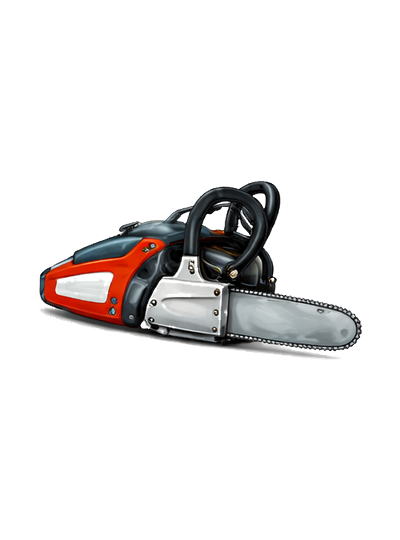
Chainsaw
Fire service chainsaws are used for forcible entry, ventilation, and clearing downed trees during storm responses. Unlike commercial models, fire department chainsaws are built to withstand extreme heat and are often carried on engine and truck companies for rapid deployment.
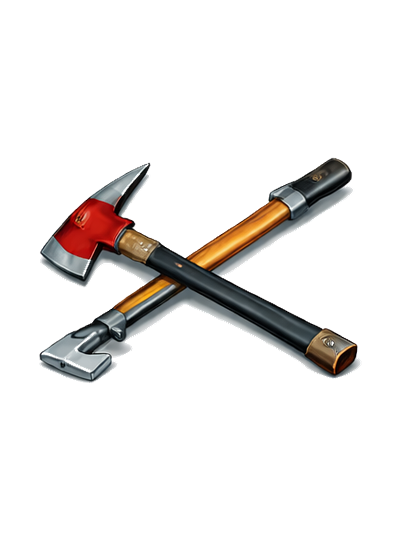
Halligan Bar & Fire Axe
The Halligan bar is the firefighter’s most versatile hand tool. Paired with a flat-head axe (together called ‘the irons’), it is used for prying open doors, breaking locks, pulling drywall, and dozens of other forcible entry techniques on the fireground.
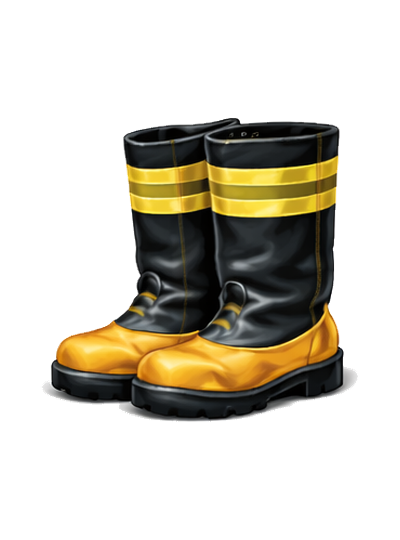
Fire Boots
Structural firefighting boots are made of flame-resistant rubber or leather with steel shanks, puncture-resistant soles, and thermal linings. They protect against radiant heat, sharp debris, electrical hazards, and standing water encountered at emergency scenes.
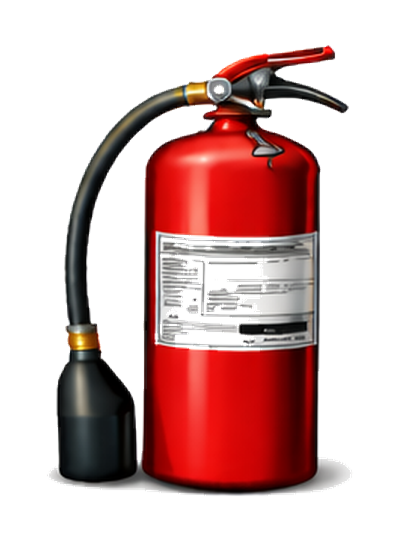
Fire Extinguisher
Portable fire extinguishers are first-line tools for incipient fires. Firefighters carry different types — ABC dry chemical, CO₂, and water — depending on the fire class. Every engine company carries multiple extinguishers for quick knockdowns before hose lines are deployed.
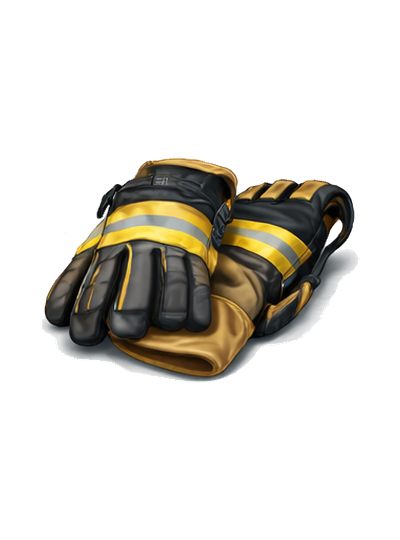
Fire Gloves
Structural firefighting gloves provide thermal protection up to 500°F while maintaining enough dexterity to operate tools, tie knots, and handle hose lines. They are part of the NFPA 1971-compliant personal protective equipment ensemble.
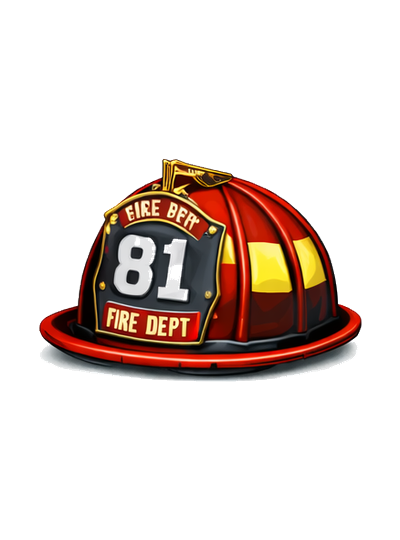
Fire Helmet
The fire helmet is an iconic symbol of the fire service. Modern structural helmets feature impact-resistant shells, thermal barriers, face shields, and reflective trim. The helmet’s long rear brim channels water away from the firefighter’s neck and shoulders.
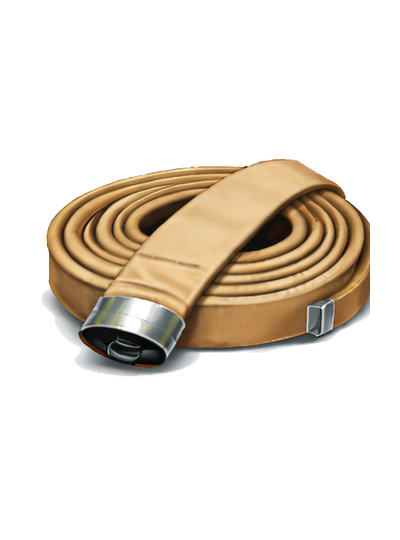
Fire Hose
Fire hose is the primary water delivery tool in firefighting. Attack lines typically range from 1¾” to 2½” diameter and are carried in pre-connected loads on the engine. Supply lines of 4” or 5” connect hydrants to the apparatus for sustained water flow.
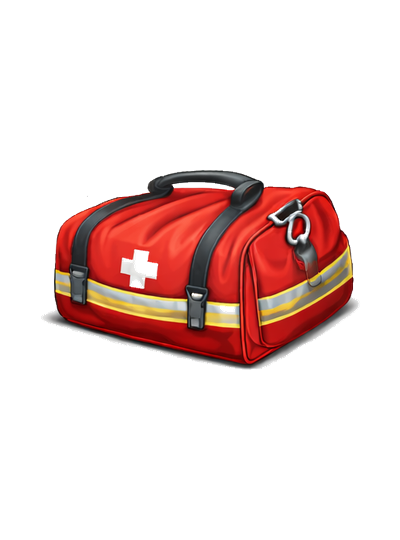
First Aid Bag
First-in medical bags carried by engine and truck companies contain essential life-saving supplies: AED, BVM, airway adjuncts, bandages, tourniquets, and medications. Firefighters respond to more medical emergencies than fires, making this equipment critical.
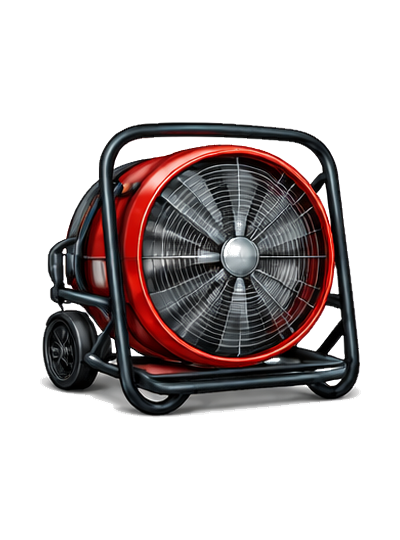
PPV Fan
Positive Pressure Ventilation fans are used to clear smoke and toxic gases from structures after fire suppression. The fan creates a high-volume airflow that pushes contaminants out through exhaust openings, improving visibility and survivability for both firefighters and victims.
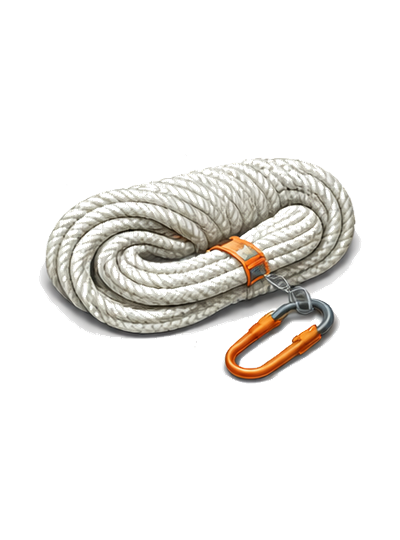
Rescue Rope
Life safety rope is rated for human loads and used in high-angle rescue, rappelling, and emergency bailout systems. Fire departments use kernmantle rope made of nylon or Technora, tested to withstand thousands of pounds of force under dynamic loading.
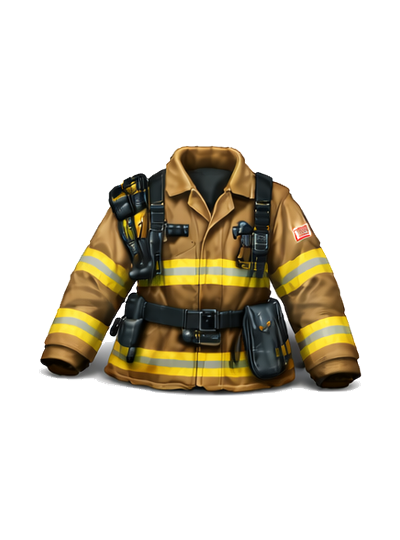
Turnout Coat
The turnout coat (bunker coat) is the outer shell of structural firefighting PPE. It features three layers — an outer shell, moisture barrier, and thermal liner — that together provide protection against direct flame contact, radiant heat, and water penetration.
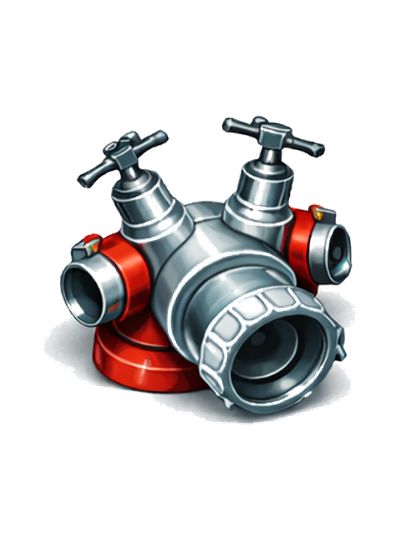
Wye Valve
A wye valve splits one hose line into two, allowing firefighters to supply multiple attack lines from a single source. Gated wye valves let each outlet be independently controlled, providing operational flexibility during fire suppression operations.
Educational Value for Firefighters
Memory matching games develop pattern recognition, spatial awareness, and working memory — all critical cognitive skills for firefighters operating in high-stress, time-critical environments. Research shows that regular memory training can improve recall speed and accuracy under pressure.
The equipment featured in this game represents the essential tools that every firefighter must know intimately. From the Halligan bar used for forcible entry to the PPV fan used for ventilation, recognizing and understanding each piece of equipment is fundamental to effective fireground operations.